Occupational therapy (OT) is, and will continue to be, an essential and resilient career choice. The U.S. Bureau of Labor Statistics projects employment for occupational therapists will grow much faster than the average for all occupations from 2024 to 2034.
At the same time, the health care landscape is rapidly changing, and occupational therapy is evolving alongside it. Advances in technology, expanded telehealth use, emerging practice areas and broader access to care are shaping how occupational therapists support individuals, families and communities.
Occupational Therapy’s Evolution: Past, Present and Future
Occupational therapy emerged in the early 20th century as a holistic profession focused on promoting health and healing through meaningful activities, often referred to as “occupations.”
Today, occupational therapy continues to center on helping people participate in the everyday activities they need and want to do. Practitioners support function, independence and quality of life across the lifespan and across a wide range of settings.
Looking ahead, occupational therapists will serve more diverse populations with increasingly complex needs. The profession is expanding its reach through advanced tools, innovative care models and new practice environments, while maintaining its foundational focus on client-centered care.
How Artificial Intelligence Is Changing Occupational Therapy Practice
Artificial intelligence is transforming nearly every aspect of daily life, and occupational therapy practice is no exception. While OT remains a deeply human profession that relies on emotional intelligence, clinical reasoning and problem-solving, AI is influencing how services are delivered, documented and evaluated.
The demand for occupational therapists is growing, not declining. As AI continues to evolve, therapists will increasingly use it to support decision-making, streamline administrative tasks, enhance data collection and improve client engagement, without replacing the essential human elements of care.
Wearable Technology in Occupational Therapy: Measuring Outcomes and Engagement
Wearable technology, ranging from simple tools to advanced systems, is changing how occupational therapists measure outcomes, increase engagement and improve efficiency.
Smartwatches and similar devices can help clients monitor metrics such as heart rate and blood pressure while completing home programs. These technologies can also support daily routines through medication reminders, habit tracking and sleep monitoring.
Specialty areas such as hand therapy, pediatrics and neurorehabilitation are increasingly using wearable technology to collect objective data and provide real-time feedback on performance. These tools support collaborative goal-setting and strengthen the therapeutic partnership between clients and occupational therapists.
Virtual and Augmented Reality in Occupational Therapy Care
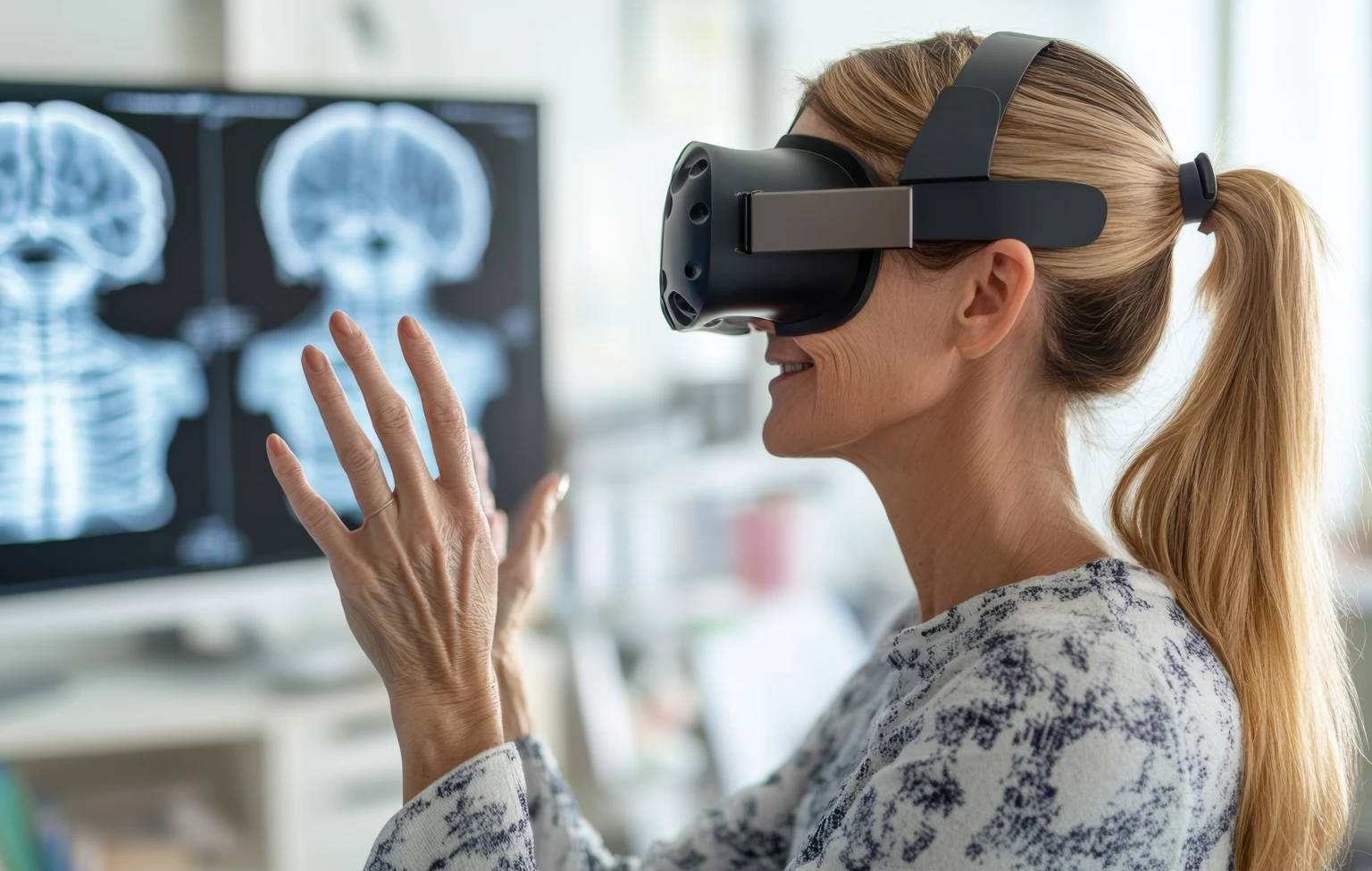
Virtual reality (VR) and augmented reality (AR) are gaining a growing role in occupational therapy as health care increasingly adopts immersive and interactive technologies.
Virtual reality uses computer-generated environments to create immersive, three-dimensional experiences. In occupational therapy, VR can simulate real-world scenarios in controlled settings and be customized to address individual goals, physical challenges and cognitive needs.
Augmented reality blends digital elements with the physical world. For example, glove-based devices can facilitate hand movement and train grasp-and-release patterns while providing real-time feedback and objective data to monitor progress.
VR and AR programs allow clients to practice real-world skills through simulation, including:
- Upper extremity coordination and fine motor skills
- Visual-motor integration
- Cognitive and executive functioning skills
- Pain management strategies
These technologies can improve engagement by offering interactive, enjoyable experiences while also enabling more precise and measurable outcomes.
Assistive Technology in Occupational Therapy: Tools That Support Function
Assistive technology (AT) includes any item, software program or equipment used to increase, maintain or improve a person’s functional capabilities. These tools range from low-tech to high-tech solutions, such as screen readers, positioning devices, mobility aids, prosthetics, speech-to-text programs, adaptive learning materials and specialized computer interfaces.
Assistive technology supports individuals across the lifespan in school, home, work and community environments, particularly those with visual, motor, cognitive or communication challenges.
Occupational therapists play a critical role in assessing needs, recommending appropriate assistive technology and training clients and caregivers to use these tools effectively and safely.
Telehealth in Occupational Therapy: Expanding Access to Care
Telehealth became widely used in occupational therapy during the COVID-19 pandemic and is expected to remain a permanent and expanding component of practice.
Virtual therapy has improved access to care for individuals in underserved areas and for those who face barriers to traveling to in-person clinics. Telehealth also allows families and caregivers to participate more actively in therapy and receive education to support effective care at home.
Early concerns related to telehealth, including data security and platform usability, have largely been addressed. Telehealth continues to evolve alongside wearable technology, VR and AR, enabling real-time data tracking and interactive, rehabilitation-based programming.
Emerging Practice Areas in Occupational Therapy
Emerging practice areas in occupational therapy reflect advances in technology as well as changing lifestyles and population needs. Occupational therapists are applying traditional skills in innovative ways and expanding their presence in community-based and nontraditional settings.
Growing areas of practice include:
- Technology: AI, robotics, assistive technology, VR, AR and wearable devices
- Health and wellness: Behavioral and mental health, sleep health, perinatal care, stress management, lifestyle and functional medicine, chronic disease management
- Productive aging: Aging in place, driving rehabilitation, palliative care and home modification
- Community health: Advocacy, health promotion and services for diverse and at-risk populations
- Work and industry: Ergonomics and return-to-work programs
- Entrepreneurship: Private practice, coaching and consulting, and technology innovation
What the Future Holds for Occupational Therapy Professionals
Throughout its history, occupational therapy has continually adapted to meet people’s needs across the lifespan. At its core, the profession remains focused on helping individuals engage in meaningful activities that support health, independence and quality of life.
As technology, telehealth and new practice settings continue to expand, occupational therapists will be positioned to deliver care in innovative ways that improve engagement, outcomes and access. These advancements ensure occupational therapy remains a vital and future-ready profession within the evolving health care system.